Practical Packet guides focus on the recurring problems that make client work harder than it needs to be.
Each guide is built around a specific problem, explains what is actually happening, and gives you a clearer way to recognize or handle it.
Right now, the guide library begins with scope creep — one of the most common problems in freelance web design and project-based client work.
Start with the main guide if you want the full picture, use the examples page if you need to recognize the pattern, or go straight to the handling guide if you already know the request is outside scope.
The goal is simple: useful information first, then a practical next step.
No filler. No giant resource library for the sake of looking complete. The guide collection grows topic by topic.
Current focus
Scope creep in freelance web design
Guide library
3 published guides
Each guide is written to answer a distinct search intent and link to the most useful next resource.
Start with scope creep
Scope creep happens when project work expands without the agreement being properly adjusted.
In freelance web design, that can mean extra pages, more revisions, new functionality, reopened approvals, post-launch additions, or client responsibilities quietly becoming your work.
The Scope Creep cluster is designed as a simple path:
Understand → Recognize → Handle
Use the pillar guide to understand the topic, the Examples guide to see how it appears in real website projects, and the How-to-Handle guide when you need a practical response process.
If wording the message is the difficult part, the free sampler and Packet 001 give you ready-to-adapt replies.
Current guides
Scope Creep: What It Is, Why It Happens, and How to Handle It
Start here for the complete overview: definition, causes, warning signs, prevention, managed change, and what to do next.
Use the main Scope Creep guide when you want the definition, causes, warning signs, prevention, and the difference between scope creep and a managed change.
Best starting point Broad understanding
Go to Scope Creep pillar guide
Recognize it in real projects
Use the Examples guide when you are trying to decide whether a request is actually outside the original agreement.
Best starting point Pattern recognition
Go to Scope Creep Examples
Respond clearly
Use the How-to-Handle guide when you already know the project changed and need a practical way to respond.
Best starting point Action and communication
Go to How to Handle Scope Creep
FREE RESOURCE
Need the words, not another guide?
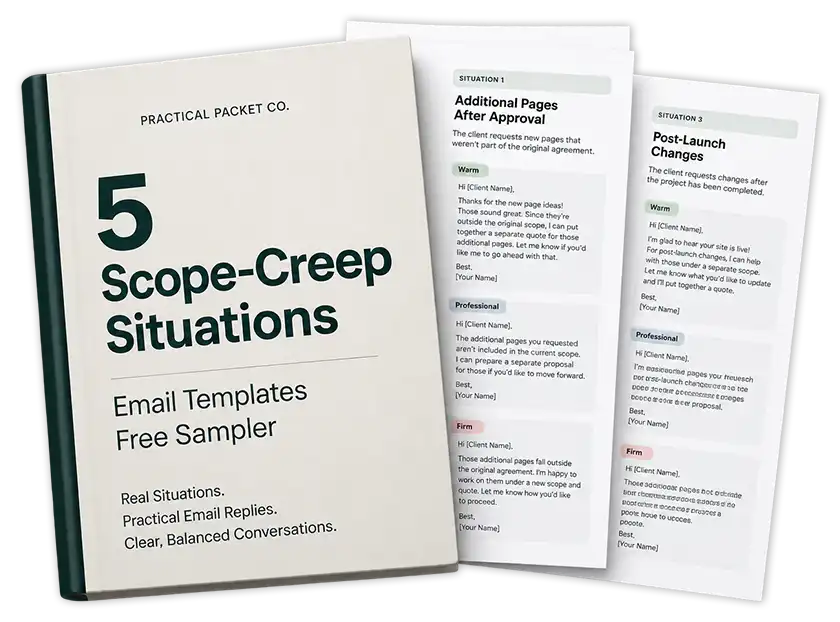
Get the free 5 Scope-Creep Situations sampler with 15 ready-to-adapt replies in Warm, Professional, and Firm tones.
Renan Corbes is a web designer/developer with more than 15 years of experience working on client websites, including WordPress builds, redesigns, revisions, content collection, project handoffs, changing requirements, ongoing support, and the everyday communication problems that come with client work.